
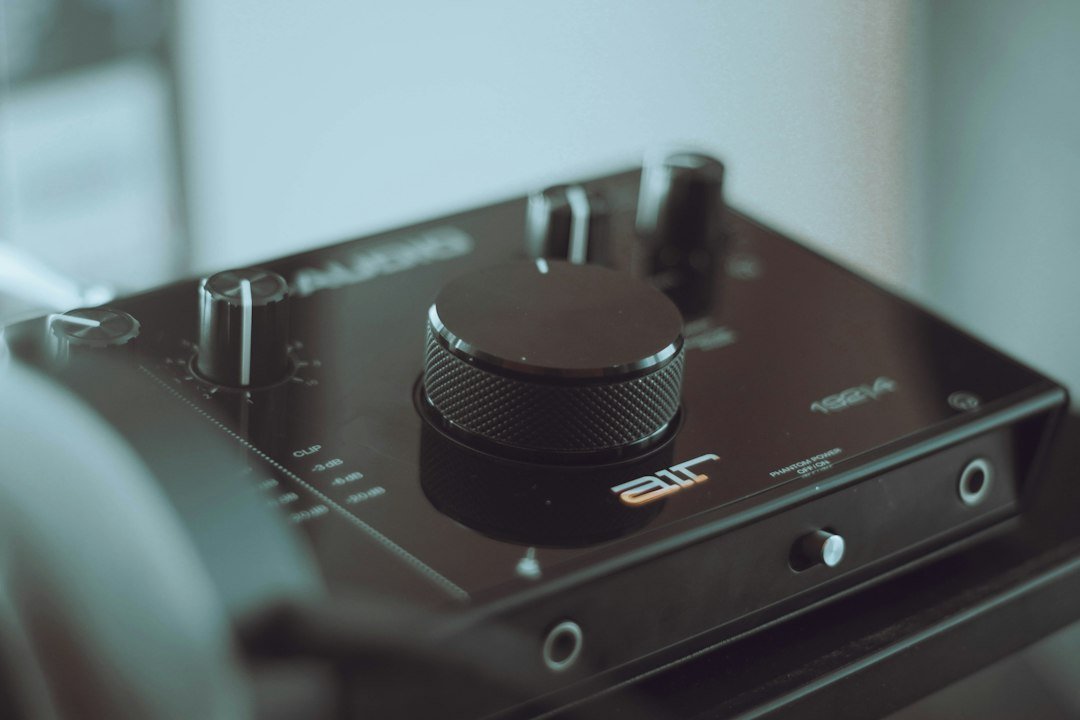
—
Introduction – Why the Right DAC Amplifier Is the Secret Sauce of Great Audio
Imagine you’ve just bought a brand‑new high‑resolution music file, a pristine FLAC collection, or a streaming subscription that promises “lossless” quality. You plug the source into your laptop, crank the volume, and—surprise!—the sound feels flat, the bass is weak, and the details you expected to hear are missing.
What’s the missing link? In most cases it’s the DAC amplifier (Digital‑to‑Analog Converter + amplifier) sitting between your digital source and your speakers or headphones. While a DAC translates the digital bits into an analog voltage, the built‑in amplifier boosts that voltage to a level that can drive your transducers. When both stages are engineered well, they work together like a perfectly choreographed dance, delivering the clarity, depth, and dynamics that make music come alive.
In this 2,000‑word deep dive we’ll explore everything you need to know about DAC amplifiers: how they work, what to look for when buying, how to set them up for optimal performance, and where the technology is heading. Whether you’re a seasoned audiophile, a home‑theater enthusiast, or just someone who wants better‑than‑phone‑speaker sound, this guide will give you actionable insights you can apply today.
—
1. Understanding the Basics – What Is a DAC Amplifier and Why It Matters
1.1 The Two‑Step Process: Digital‑to‑Analog Conversion + Amplification
A DAC (Digital‑to‑Analog Converter) takes the binary data that represents audio—think of the 0s and 1s stored in a music file—and turns it into a continuous electrical waveform. This waveform is essentially a voltage that mirrors the original sound pressure wave recorded in the studio.
But a raw DAC output is usually only a few millivolts (mV). That level is far too low to move the voice coils in a pair of headphones or the drivers in a set of bookshelf speakers. Enter the amplifier: it boosts the low‑level signal to a higher voltage (often a few volts) while preserving the waveform’s integrity.
When a single device houses both functions, it’s called a DAC amplifier (sometimes marketed as a “headphone amp with built‑in DAC” or “USB DAC/amp combo”). This integration eliminates the need for separate boxes, reduces cable clutter, and—when designed properly—minimizes signal degradation caused by extra interconnects.
1.2 Key Terminology You’ll Hear
| Term | Simple Definition |
|——|——————-|
| Bit Depth | Number of bits used per sample (e.g., 16‑bit, 24‑bit). Higher depth = finer amplitude resolution. |
| Sample Rate | How many times per second the audio is measured (44.1 kHz, 96 kHz, 192 kHz, etc.). Higher rates can capture more detail. |
| Jitter | Tiny timing errors in the digital signal that can cause distortion. Good DACs have jitter‑reduction circuitry. |
| THD+N | Total Harmonic Distortion plus Noise; lower numbers mean cleaner output. |
| Impedance Matching | Aligning the output impedance of the DAC/amp with the input impedance of headphones or speakers for optimal power transfer. |
| Gain | The amount of amplification (e.g., 10 dB, 20 dB). Too much gain can cause clipping; too little leaves you under‑driven. |
1.3 Why a Dedicated DAC Amplifier Beats “Built‑In” Solutions
Most smartphones, laptops, and TVs have a basic DAC and a tiny headphone driver baked into the motherboard. These components are cost‑optimized, not performance‑optimized. Common shortcomings include:
- Limited Bit Depth / Sample Rate – Often capped at 16‑bit/48 kHz.
- High Jitter – Due to noisy power supplies and cramped PCB layouts.
- Insufficient Power – Especially for high‑impedance headphones (250 Ω +).
- Noise from Digital Circuits – Crosstalk between USB, Wi‑Fi, and audio sections.
- Class D (Switch‑Mode) Amplifiers – Highly efficient (90 %+), compact, and generate less heat. Modern Class D chips (e.g., Texas Instruments TPA series) have THD+N figures below 0.001 % and can drive both headphones and speakers.
- Class A/B Amplifiers – Traditional linear amplifiers that deliver warm, musical sound but are less efficient and produce more heat. Many audiophile headphone amps still favor Class A/B for its “silky” texture.
- Balanced vs. Single‑Ended – Balanced outputs (e.g., XLR, 4.4 mm Pentaconn) carry two opposite polarity signals, canceling common‑mode noise and allowing higher power delivery. Single‑ended (3.5 mm, 6.3 mm) is more common for portable setups.
- Gain Staging & Volume Control – Quality amps use digital volume control (attenuation in the digital domain) to avoid the noise introduced by potentiometers, or they employ precision stepped attenuators for ultra‑smooth volume curves.
- Linear Regulators (e.g., LT3042) for low noise.
- Separate Analog and Digital Power Rails to prevent digital switching noise from contaminating the analog path.
- Large Capacitors (electrolytic + film) for ripple suppression.
- Battery Operation (optional) for truly portable, noise‑free listening.
- Jitter Reduction – Most mid‑range DACs already have adequate jitter control. Investing in a premium clock is only necessary for critical studio work.
- Power Output – If you drive low‑impedance headphones (≤32 Ω) or powered speakers, a modest amp is sufficient. High‑impedance or inefficient planar magnetic headphones demand higher voltage and current, justifying a more expensive amp.
- Balanced Connectivity – If your signal chain is short (desktop to headphones), single‑ended may be fine. For longer cable runs or noisy environments, balanced outputs can be worth the extra cost.
A dedicated DAC amplifier isolates the audio circuitry, uses higher‑grade components, and often includes features such as asynchronous USB, balanced outputs, and customizable filters. The result? A measurable improvement in signal‑to‑noise ratio (SNR), lower distortion, and a more spacious soundstage.
—
2. How DAC Amplifiers Work – The Technology Inside the Box
2.1 The DAC Engine: From Bits to Waves
1. Input Interface – Most modern DAC amps accept USB, optical (TOSLINK), coaxial (S/PDIF), or Bluetooth. USB is the most common for computer‑based listening because it can operate in asynchronous mode, where the DAC controls the timing of data flow, dramatically reducing jitter.
2. Clock and Timing – A high‑precision crystal oscillator or a phase‑locked loop (PLL) provides the timing reference. Some premium units use external master clocks (e.g., Word Clock) for studio‑grade accuracy.
3. Digital Filter – After the raw data arrives, the DAC applies a digital filter (often selectable: “Sharp”, “Slow”, “Minimum Phase”) to shape the frequency response and remove aliasing.
4. Conversion Core – The heart of the DAC can be based on:
* Delta‑Sigma (ΔΣ) Modulators – Most common in consumer gear; they oversample the signal (up to 384×) and use noise shaping to push quantization noise out of the audible band.
* R‑2R Ladder – Used in high‑end units for ultra‑low latency and linearity.
* Hybrid Designs – Combine ΔΣ front‑ends with R‑2R back‑ends for the best of both worlds.
5. Analog Output Stage – The converted analog voltage is passed through a low‑pass filter (often a passive RC network) to smooth out any remaining high‑frequency artifacts.
2.2 The Amplifier Section: Powering Your Audio
2.3 Power Supply – The Unsung Hero
A clean, stable power supply is crucial. Look for:
—
3. Choosing the Right DAC Amplifier – A Practical Buying Guide
3.1 Identify Your Primary Use‑Case
| Scenario | Recommended Features | Typical Price Range |
|———-|———————|———————|
| Desktop Hi‑Res Listening (PC, Mac) | USB‑asynchronous, 24‑bit/192 kHz, balanced XLR output, Class A/B headphone amp | $200‑$600 |
| Portable Gaming / Mobile | Small form factor, USB‑C or Bluetooth, low power consumption, 3.5 mm output | $80‑$200 |
| Home Theater / AV Integration | Multiple inputs (optical, coax, HDMI ARC), high power (≥100 W per channel), support for Dolby Atmos | $300‑$1,200 |
| Studio Monitoring | Word‑clock sync, low latency, dual‑mono design, balanced outputs, high SNR (>120 dB) | $400‑$1,500 |
| Audiophile Headphone Enthusiast | High‑impedance support (≥300 Ω), ultra‑low THD+N, customizable filters, tube or hybrid amp option | $250‑$2,000 |
3.2 Core Specification Checklist
1. Supported Sample Rates & Bit Depth – Aim for at least 24‑bit/96 kHz; 24‑bit/192 kHz is future‑proof.
2. Signal‑to‑Noise Ratio (SNR) – >110 dB for headphones, >115 dB for speakers.
3. THD+N – <0.001 % is excellent; <0.005 % is acceptable for most users.
4. Output Power & Impedance Compatibility –
* Headphones: 10–50 mW per channel for low‑impedance (≤32 Ω); 30–100 mW for high‑impedance (≥250 Ω).
* Speakers: Check RMS wattage at 4 Ω/8 Ω and ensure it matches your speaker’s power handling.
5. Connectivity – USB (preferably Type‑C), optical, coaxial, Bluetooth aptX HD, RCA, XLR, 3.5 mm/6.3 mm jacks.
6. Build Quality – Solid chassis (aluminum or steel), gold‑plated connectors, and proper shielding.
7. Software & Firmware Support – Ability to update firmware, customize filter curves, and integrate with DAWs or streaming apps.
3.3 Popular Models Worth Considering
| Model | DAC Chip | Amp Class | Notable Strengths | Approx. Price |
|——-|———-|———–|——————-|—————|
| AudioQuest DragonFly Cobalt | ESS 9038Q2M | Class D (mini‑amp) | USB‑C, portable, 2.1 V output, superb SNR | $350 |
| Schiit Modi + Magni Stack | AKM AK4490 (Modi) | Class A (Magni) | Modular, excellent value, balanced XLR (Magni+) | $250‑$500 |
| iFi Audio Zen DAC | Burr‑Brown PCM1792A | Class A/B (headphone) | 4.4 mm balanced output, Bluetooth, bass boost | $129 |
| Cambridge Audio CXN (V2) | Dual AKM | Class D | Network streamer + DAC + amp, 5.1/7.1 surround | $1,299 |
| RME ADI-2 DAC FS | AKM AK4499 | Class A (headphone) | Ultra‑low jitter, parametric EQ, detailed metering | $1,199 |
| FiiO K9 Pro | ESS ES9038Q2M | Class D | High power (7 W @ 32 Ω), balanced outputs, OLED UI | $299 |
Tip: If you already own a high‑quality headphone amp, you can pair it with a standalone DAC (e.g., Topping D50s) for a modular approach.
3.4 Budget vs. Performance – Where to Compromise
—
4. Integration & Setup – Getting the Most Out of Your DAC Amplifier
4.1 Wiring Best Practices
1. Use High‑Quality Cables – Gold‑plated or OCC (oxygen‑free copper) conductors reduce resistance and improve durability. For balanced connections, keep the cable length under 3 m to avoid common‑mode noise buildup.
2. Separate Power Sources – Plug the DAC amp into a dedicated wall outlet or a high‑quality power strip with surge protection. Avoid sharing the outlet with high‑