
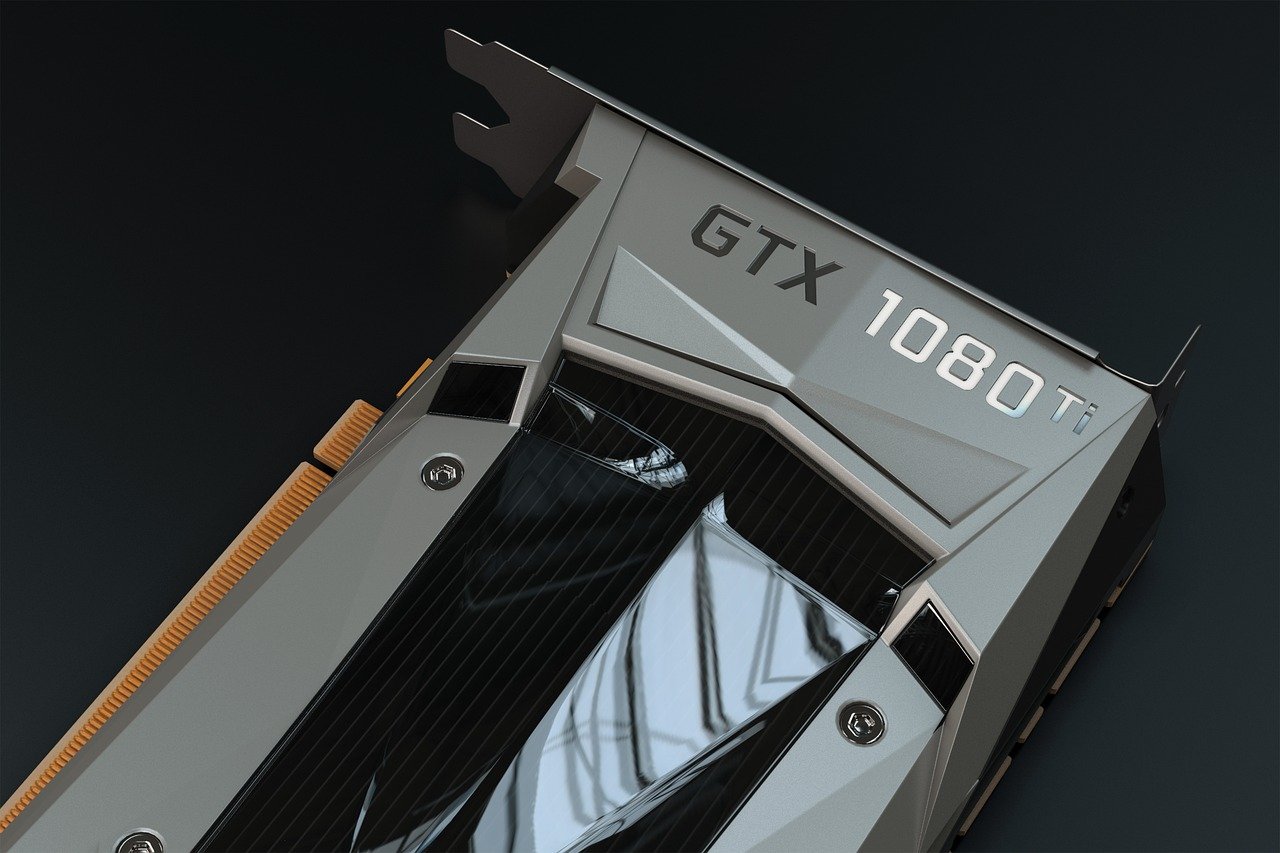
Selecting a next-generation graphics card in 2026 requires navigating a radically shifted GPU landscape. In this comprehensive hardware breakdown of the NVIDIA RTX 50-Series vs. AMD Radeon RX 8000-Series, you will learn how these competing architectures handle modern workloads, raw rasterization, real-time ray tracing, and AI-driven upscaling. We analyze architectural shifts like NVIDIA’s Blackwell and AMD’s RDNA 4 to determine which silicon offers the best performance-per-dollar for your gaming rig or workstation. Whether you prioritize path tracing at 4K or high-frame-rate 1440p gaming on a budget, this guide provides the benchmarks, pricing analysis, and power efficiency metrics needed to make an informed purchasing decision.
- Target Audiences Differ: NVIDIA’s Blackwell RTX 50-Series dominates the ultra-enthusiast tier and heavy path-tracing workloads, while AMD’s RDNA 4 RX 8000-Series focuses on maximizing price-to-performance in the mid-to-high mainstream markets.
- Memory Standards Evolve: High-end RTX 50-series cards leverage ultra-fast GDDR7 memory for massive bandwidth gains, whereas AMD optimizes cost by utilizing mature, high-speed GDDR6 configurations on refined bus widths.
- AI Upscaling Wars: DLSS 4 introduces advanced neural reconstruction tied to hardware optical flow accelerators, while AMD’s FSR 4 transitions to an open, AI-driven temporal upscaling model to bridge the quality gap.
How Do Blackwell and RDNA 4 Architectures Differ in Design?
NVIDIA’s Blackwell architecture, powering the RTX 50-Series, represents a massive leap in transistor density and specialized silicon. Fabricated on a customized TSMC 4N process, Blackwell introduces redesigned Streaming Multiprocessors (SMs) alongside fifth-generation Tensor Cores and fourth-generation RT Cores. These hardware blocks are engineered specifically to accelerate complex mathematical workloads, making Blackwell a powerhouse for both local machine learning tasks and high-fidelity rendering.
The memory subsystem represents a major architectural divergence between the two brands. NVIDIA has integrated next-generation GDDR7 memory across its mid-to-high-end Blackwell stack, enabling unprecedented memory bandwidth. The transition to high-bandwidth memory is anchored by the official JEDEC GDDR7 graphics memory standard, which delivers up to 32 Gbps per pin, vastly outstripping the bandwidth limits of older GDDR6 modules. This standard allows Blackwell to avoid memory bus bottlenecks even during intensive 4K path-traced gaming.
In contrast, AMD’s RDNA 4 architecture, which powers the Radeon RX 8000-Series, takes a highly pragmatic approach. Rather than chasing the ultra-expensive monolithic designs of the extreme enthusiast market, AMD focuses on refined monolithic dies built on TSMC’s advanced N4 node. RDNA 4 optimizes the instruction pipeline, improves wave32/wave64 scheduling, and refines the internal cache hierarchy. To keep manufacturing costs low, AMD continues to utilize highly optimized GDDR6 memory running at 20 Gbps, passing those savings directly to budget-conscious consumers.
Which GPU Architecture Delivers Better Raw Rasterization Performance?
For traditional rasterized games—which still make up the vast majority of competitive esports titles like Valorant, Counter-Strike 2, and Apex Legends—raw compute throughput is king. AMD’s RDNA architectures have historically excelled in this category, and RDNA 4 continues this legacy. By maximizing the physical layout of its Compute Units (CUs) and leveraging a massive, high-speed Infinity Cache, the RX 8000-Series delivers exceptional frame rates without relying on upscaling algorithms.
At 1440p resolution, a mid-range Radeon RX 8000-series card frequently matches or exceeds the rasterization performance of its direct RTX 50-series price competitor. The streamlined design of RDNA 4 means that in pure rasterization workloads, there is very little driver overhead, allowing older CPUs to feed the GPU more efficiently. This makes AMD an incredibly attractive option for players who prefer native-resolution gaming and high refresh rates over heavy visual post-processing.
NVIDIA’s Blackwell architecture does not ignore rasterization, but its generational gains in pure rasterized performance are more incremental compared to its massive leaps in ray tracing. Blackwell relies on larger L2 caches and its ultra-fast GDDR7 memory bus to push higher frame rates at 4K. However, when comparing raw performance-per-dollar in games without ray tracing, AMD’s focused architecture consistently offers a more compelling value proposition for mainstream system builders.
How Do Ray Tracing and Path Tracing Compare on These Next-Gen Cards?
When it comes to real-time ray tracing and fully path-traced environments, the performance gap between the two manufacturers remains distinct. NVIDIA’s fourth-generation RT Cores in the RTX 50-Series introduce hardware-level optimizations for Bounding Volume Hierarchy (BVH) traversal. This specialized hardware offloads the heavy mathematical calculations required to trace light rays, preventing the primary graphics pipeline from stalling during complex scenes.
AMD has made significant strides with RDNA 4, completely redesigning its internal ray-tracing blocks to address the shortcomings of RDNA 3. The RX 8000-Series features dedicated ray-box sorting and improved intersection engines, which significantly reduce the performance penalty of enabling ray tracing. In standard ray-traced titles where light reflections and shadows are used sparingly, RDNA 4 easily maintains playable frame rates at 1440p.
However, extreme path-traced titles like Cyberpunk 2077’s RT Overdrive mode or Alan Wake 2 highlight the limits of AMD’s approach. Recent industry hardware analysis indicates that while RDNA 4 closes the ray-tracing gap by roughly 25% over its predecessor, Blackwell still holds a commanding 50% performance lead in heavy path-tracing scenarios at native resolutions. If your goal is to experience cutting-edge lighting technologies without compromise, NVIDIA remains the undisputed leader in this category.
What Are the Real-World Power Efficiency and Thermal Demands?
Power delivery and thermal management have become critical points of comparison for modern PC builds. NVIDIA’s high-end Blackwell GPUs utilize the refined 12V-2×6 power connector standard, which addresses the physical connection and safety issues associated with the older 12VHPWR design. While this ensures safer power delivery, top-tier RTX 50-series cards can still draw upwards of 400 to 450 watts under full load, requiring robust power supplies and spacious PC cases with excellent airflow.
AMD has taken a much more conservative approach to power consumption with the RX 8000-Series. By targeting the mainstream and high-end sweet spots rather than the ultra-enthusiast tier, RDNA 4 graphics cards operate within highly efficient thermal envelopes. Most RX 8000-series cards top out around 220 to 280 watts, allowing them to utilize standard dual 8-pin PCIe power connectors. This eliminates the need for users to upgrade to an ATX 3.1-compliant power supply.
This power efficiency translates directly to cooler and quieter operation. AIB (Add-In Board) partners can design smaller, dual-fan cooling solutions for AMD cards, making the RX 8000-Series highly suitable for Small Form Factor (SFF) builds. NVIDIA’s Blackwell cards, particularly the high-end variants, require massive triple-slot coolers to dissipate heat effectively, which can limit case compatibility and increase overall system noise.
Which Ecosystem Offers the Best AI Upscaling and Frame Generation?
The battle between proprietary and open-source software ecosystems is fiercer than ever in 2026. NVIDIA’s DLSS 4 (Deep Learning Super Sampling) remains a cornerstone of the RTX value proposition. DLSS 4 introduces advanced multi-frame generation and neural ray reconstruction that runs exclusively on Blackwell’s optical flow accelerators. This tight integration of hardware and software produces incredibly clean upscaled images with minimal temporal artifacts, making 4K gaming highly accessible even on mid-range hardware.
AMD has responded by transitioning its FidelityFX Super Resolution technology. FSR 4 moves away from the hand-tuned spatial and temporal heuristics of older versions, embracing a fully machine-learning-driven model. By utilizing the matrix math units built directly into RDNA 4 silicon, FSR 4 achieves cleaner edge reconstruction and fewer shimmering artifacts than previous iterations. Crucially, AMD maintains its commitment to open standards, ensuring FSR 4 remains compatible with a wide range of hardware.
Despite AMD’s impressive software progress, NVIDIA’s proprietary ecosystem still holds an edge in overall image quality and developer adoption. DLSS 4’s ability to reconstruct fine details in motion, combined with NVIDIA Reflex for latency reduction, provides a more seamless gaming experience. However, AMD’s open-source approach ensures that FSR 4 is rapidly integrated into modern game engines, offering a highly competitive alternative for gamers who prefer an open ecosystem.
How Should You Allocate Your Budget Between NVIDIA and AMD in 2026?
Your purchasing decision ultimately comes down to your budget and specific performance expectations. If you are shopping in the ultra-enthusiast tier—aiming for uncompromised 4K performance, maximum path tracing, and professional AI development capabilities—the NVIDIA RTX 50-Series has no real competition. Cards like the RTX 5090 and RTX 5080 occupy a premium price bracket that AMD has intentionally chosen not to contest in this generation.
If your budget falls in the highly competitive $400 to $700 range, the decision becomes much more nuanced. The AMD Radeon RX 8800 XT and RX 8700 XT offer outstanding value, providing generous VRAM allocations (often 16GB or more) and superb rasterization performance that outclasses similarly priced NVIDIA options. For gamers who primarily play competitive multiplayer titles or traditional open-world games at 1440p, AMD delivers far more frames-per-dollar.
Before purchasing, carefully assess your current monitor’s resolution, your power supply’s wattage, and your preferred game genres. If you value cutting-edge visual technologies like path tracing and top-tier AI upscaling, investing the extra capital into an NVIDIA RTX 50-series card is highly justified. If you prefer straightforward hardware value, excellent power efficiency, and superb native performance, building your system around an AMD Radeon RX 8000-series card is the smarter financial choice for the long term.